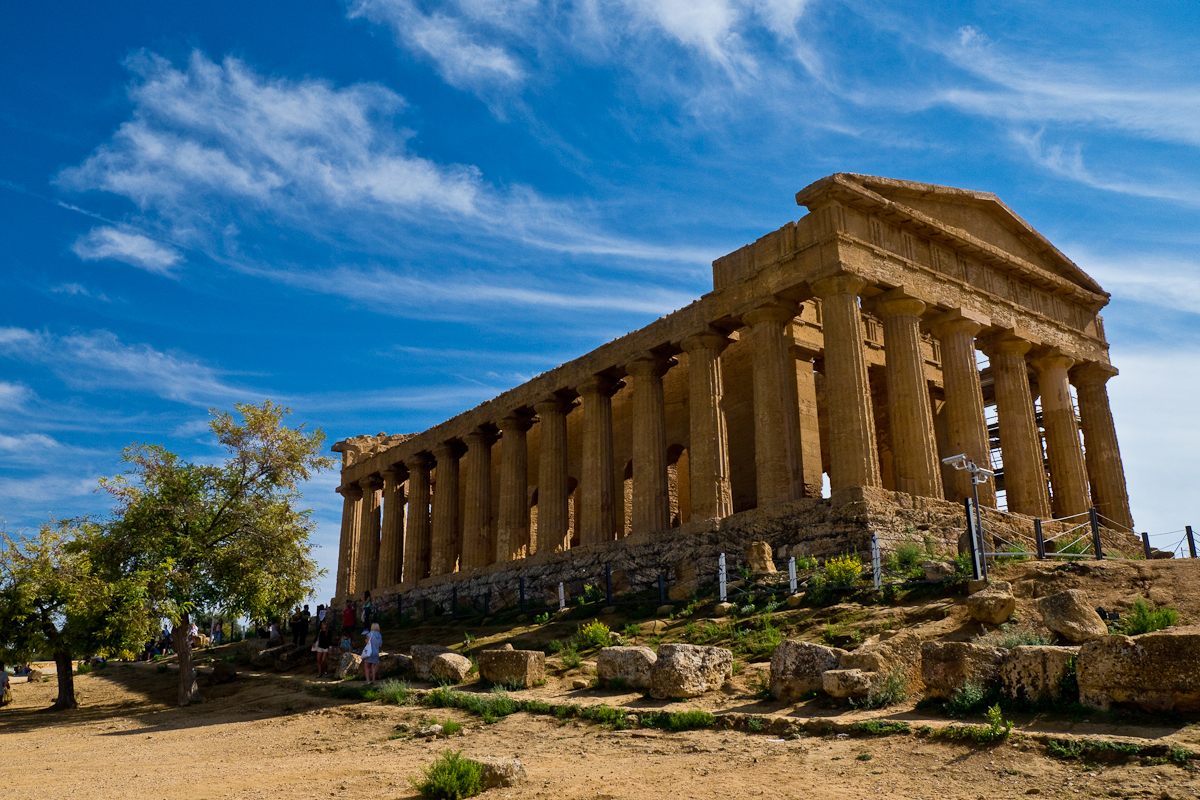
Valley of the Temples in Agrigento: how and when to visit

The Valley of the Temples in Agrigento is one of the most amazing places in Sicily, Italy and even in Europe. It is a vast archaeological site where the towering ruins of the ancient Greek temples, on a barren plateau surrounded by the Mediterranean scrub, olive and almond trees in bloom. A place of incredible beauty that has inspired many romantic painters.

The site corresponds to the Greek city of Akragas, the original core of the ancient Agrigento, founded in 582 BC. Today is the regional archaeological park with an area of 1300 hectares is the largest archaeological site in the world. In 1997, the Valley of the Temples was recognized World Heritage Site.
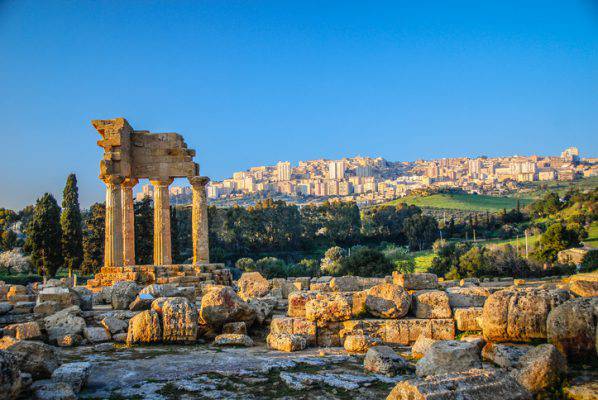
The Valley of the Temples was awarded the Prix Italian Landscape 2017 at the first edition of the National Landscape Day, established by Mibact to promote the culture landscape as Italian identity value. To be awarded was the project Agri Gentium: landscape regeneration of the Archaeological and Landscape Park of the Valley of the Temples in Agrigento.
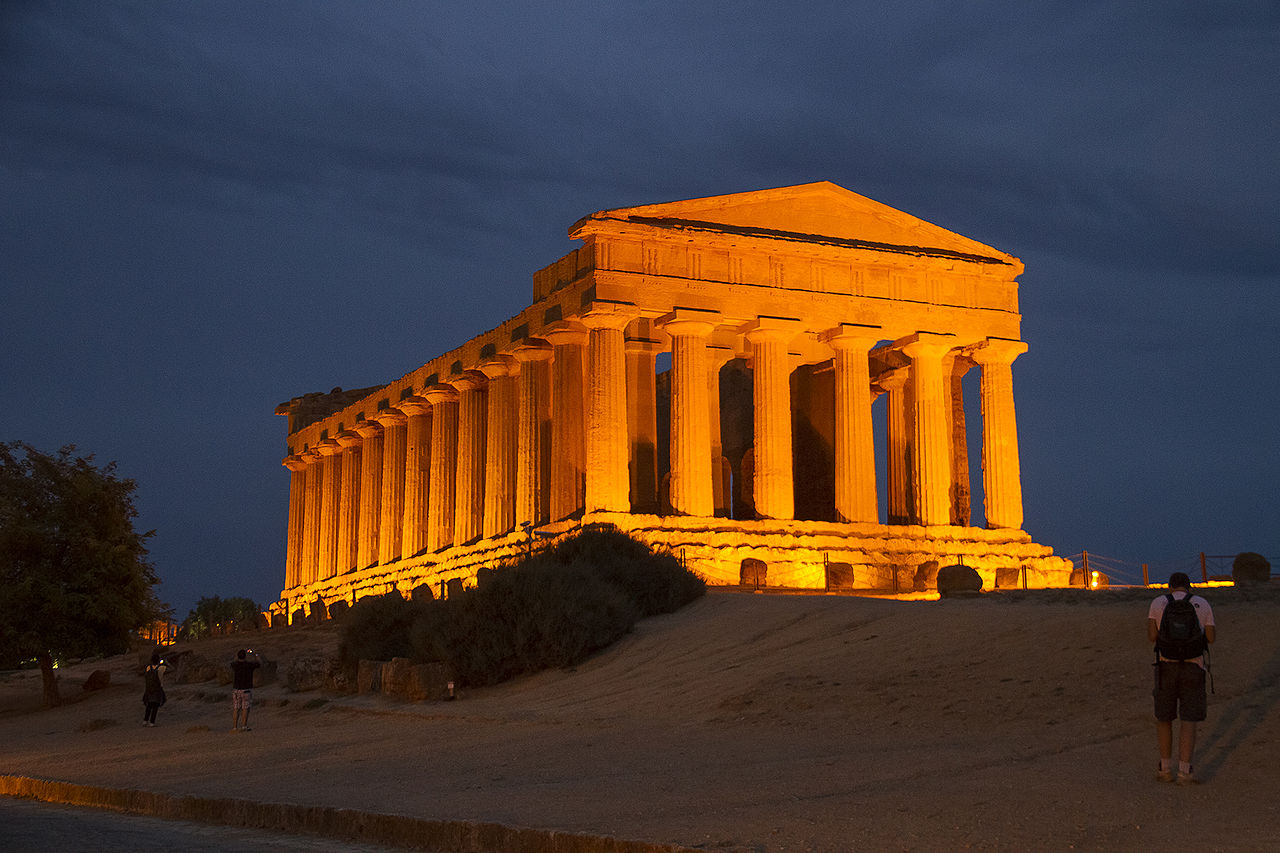
Valley of the Temples: the monuments
The area includes ten temples in Doric style, dating between the sixth and second centuries BC, and is located south of the city of Agrigento, overlooking the city and the nearby sea. A position with a magnificent view. The temples were built with local tufa stone and are facing east, as to respect the custom according to which the statue of the god, placed inside the entrance cell, was illuminated by the rising sun.

Valley of the Temples: when to go and how to get
The Valley of the Temples can be visited all year, keeping in mind that in summer the heat is scorching, almost an African climate. If you want to admire the ancient temples surrounded by blooming almond trees, the ideal time is spring. The almond trees bloom as early as February, and at the beginning of this month (March) is the feast of the “Almond Blossom”. Folk groups from around the world gather in the Valley of the Temples gather together to celebrate the arrival of spring with music, songs and dances.
In summer or late spring you can go up to the Valley in the early morning or late afternoon, when the archaeological area is less crowded and sunlight illuminates the temples with spectacular effects.
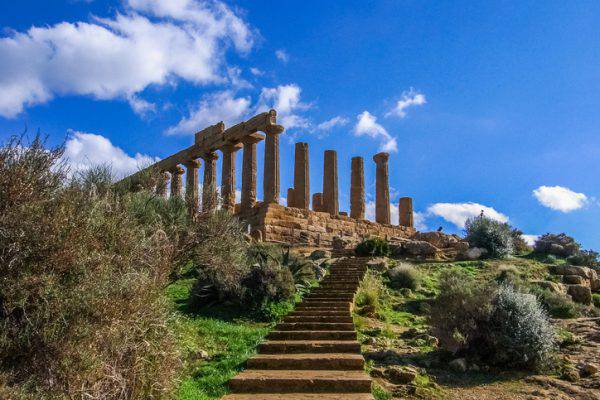
How to get

By plane: the nearest airport to Agrigento is to Comiso about 120 km. From here you reach Agrigento with the SS 115 along the southern coast of Sicily.

By car: from Palermo (about 130 km) take the SS121 exit to Agrigento / SS189 and continue to the Valley of the Temples. From Trapani (about 175 km) take the State Road 115 up to Porto Empedocle. From Catania (about 165 km) take the A19 Catania-Palermo and, after Enna, Caltanissetta-Agrigento exit towards, taking the SS 640.

Just few minutes from Agrigento and The Valley of the Temples is located Villa Concordia: strategically located close to Agrigento and the majestic archeological site Valley of the Temples, Concordia is an exclusive villa with private swimming pool, ideal for those seeking privacy, comfort and relaxation. This luxury villa is set in a pleasant rural area, hidden among the rocks, not too far from the beach and the city. Immersed in a luxuriant garden, the property consists of three buildings overlooking the large pool and a beautiful Jacuzzi.
Dreaming about sun… Sicily here we come!

Dreaming about sun… Sicily here we come!

With Christmas as a vague memory, days are now slowly beginning to lengthen and although summer is still far away, our desire to travel is champing at a bit! So let’s start daydreaming and, why not, thinking about your summer holiday… because, you know, to book a holiday is never too early!

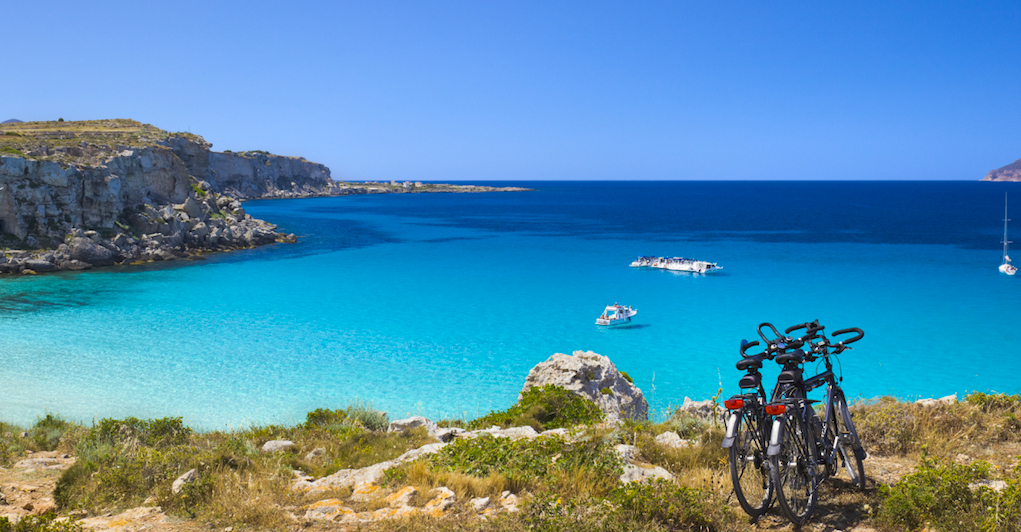
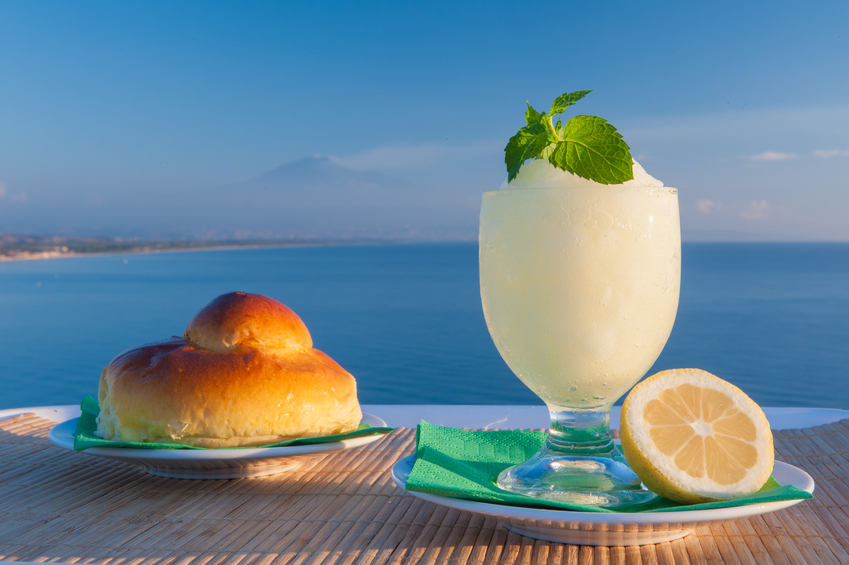
Our fist selection is the southern coast of Sicily, from Agrigento to Catania. Here, in spring time, you can already reach the shore (timidly!) and enjoy the first warm rays of the sun. Sicily is the ideal place for outdoor dining with its rich cuisine and its enchanting atmosphere between baroque and exotic.

Catania can be easily reached by plane (international airport of Catania, Fontanarossa) or by ferry (from Naples). Alternatively, if you are travelling from Palermo, you can immerse yourself in the baroque for a couple of days, ant then proceed towards the sea of the South.

Lying on the hills of the Etna Vulcan, Mascalucia is an excellent base for exploring the East cost and getting lost in its pistachios plantations. If you like trekking, our suggestion is to organize a daytour in the Natural Reserve “La Timpa” in Acireale: here you will see many natural phenomena summarizing the history of Etna. The natural park is the overlapping of many eruptive eras; from light grey ancient lava to the dark grey one, with special crystals of augite, typical of the more recent eruptions.

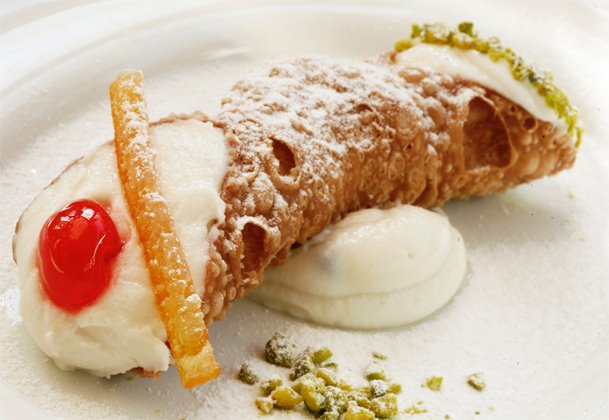
Take advantage of the proximity of Catania and spend at least one afternoon in this lovely city. Not to be missed the historic pastry laboratory of Nonna Vincenza in San Placido square, where you can taste and buy delicious pastries with almonds and pistachios, cream horns with ricotta cheese and chocolate and, of course, the famous cannoli.

Just outside Catania, you will get lost among lemon trees and gardens of historic interest. Take note of the Garden Biviere Lenitni (Siracusa), which is a spectacular Mediterranean garden created in the late Sixties. As legend would have it, in this place Hercules, son of Zeus, brought the skin of the defeated lion Nemean as a gift to Ceres, goddess of the harvest. He created a lake that was named after him: Lacus Erculeus (during centuries, the lake changed its name and Arabs called it Beveré, which means waterhole for sheep and fish). Here you can admire lush palm trees, blue Jacaranda, old roses, Yucca specimen and unusual Xanthorrea trees.

The hottest and more exotic sea of Sicily is located just south of Syracuse. Forget beach resorts and imagine yourself lying in the uncontaminated nature: the Cala di Terrauzza, the protected area of Plemmirio and the Marchesa di Cassibile beach.

And now, tell us, don’t you feel a sudden desire of Sicily? We can already perceive the smell of citrus, cannoli and chocolate while the wind is brushing the palm trees.

Catania: Baroque and Chagall

Catania: Baroque and Chagall

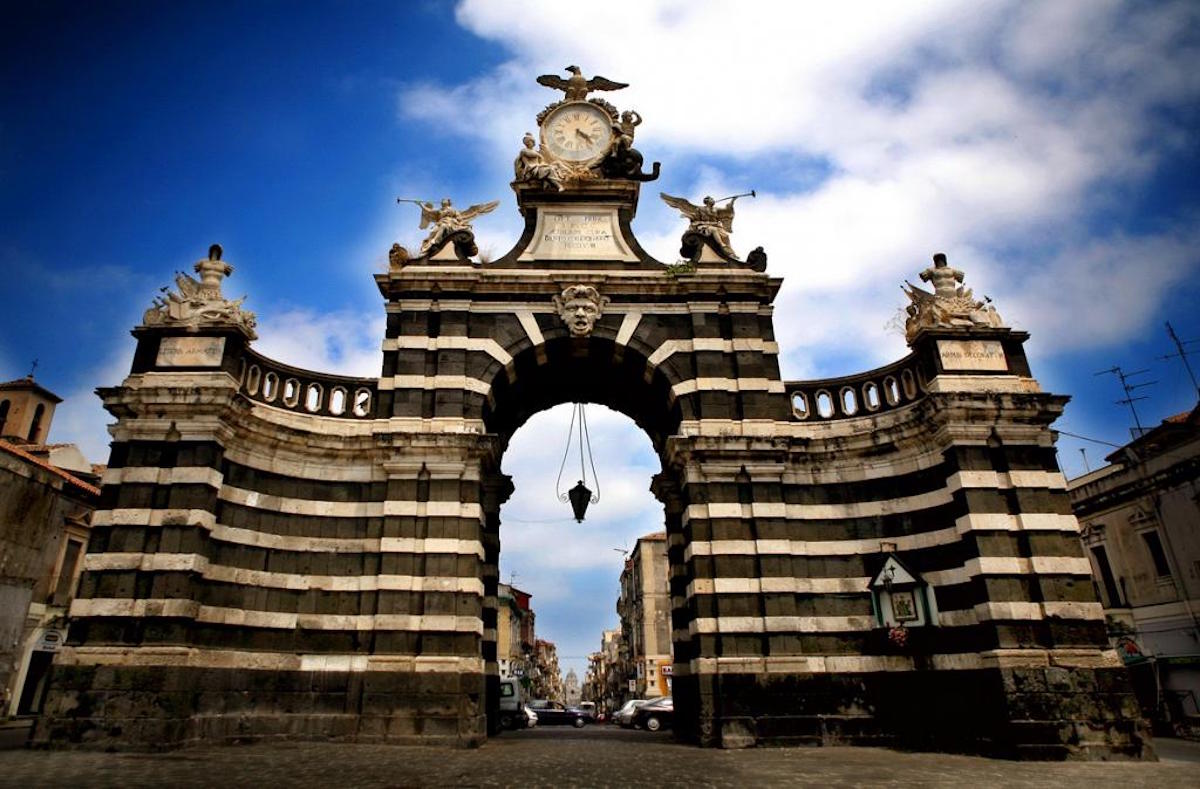
The center of the town is a UNESCO World Heritage site, and there are at least three tours to do in a perfect weekend. The first one, the classic tour starting from Piazza Duomo to visit the Cathedral of Sant’Agata and the fountain of the elephant, symbol of the city. Then follow the Etnea road and reach the  Bellini Garden.

The second trip is in a place away from the usual tour: the Monastery of St. Nicolò l’Arena, one of the largest Benedictine monasteries in Europe. The third: Chagall Love and Life exhibition. It includes some of the finest works by the artist hosted at the Castello Ursino.

Arab-Norman Palermo – A new entry in the UNESCO’s World Heritage

Arab-Norman Palermo – A new entry in the UNESCO’s World Heritage

The recent news is that Palermo became a member of the UNESCO’s World Heritage, which is the 51th site in Italy, the first nation in the ranking. The decision was made during the last meeting of the World Committee in Born held during July 2015.

The UNESCO’s World Heritage is a marvellous list made of amazing cultural and natural sites all around the world. They are wonderful and unique places considered a human heritage.

Located on the northern coast of Sicily, Arab-Norman Palermo itinerary includes nine religious and civil structures dating from the era of the Norman kingdom of Sicily (1130 – 1194): in particular there are three churches, a bridge, two palaces, three cathedrals including the cathedrals of Monreale and Cefalú.

These monuments represent the social-cultural syncretism between Byzantines, Islamic and Western cultures on Sicily, from which the new concepts of space, decoration and traditional structure of this art were originated.

There are also testimonies of people of different cultures as Latin, French, Byzantine, Muslim, Jewish and Lombard regarding the coexistence.

“Il Palazzo dei Normanni”

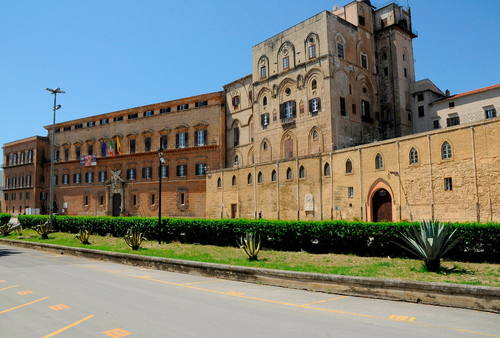
The Norman Palace is the oldest royal residence in Europe and was build during the Islamic domination of Sicily (lasting from 827 to 1091). Following the Normans to reign and to transform the original Arabic palace in a complex structure, making also the Palatine Chapel, a three-aisled basilica in Byzantine – Norman style.
Today the Norman Palace is also home to the Sicilian Regional Assembly and the Astronomical Observatory citizen.

“San Giovanni degli Eremiti”

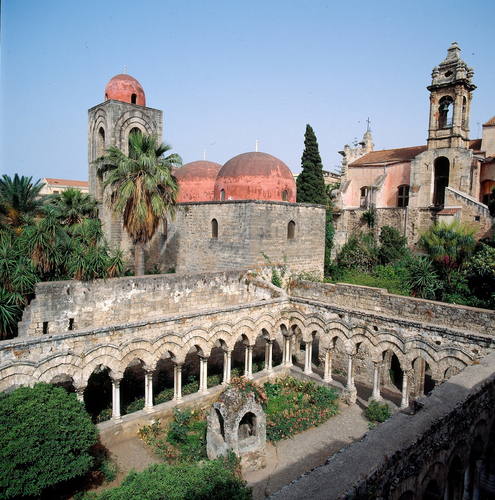
The church of San Giovanni of the Heremits. Located near the Norman Palace, dates back to the 6th century and was first a mosque, then a Christian church by the will of the sovereign Ruggero II, finally restored in 1880 in order to bring out the calls to the East, as proved from the domes colour red.

“Santa Maria dell’Ammiraglio

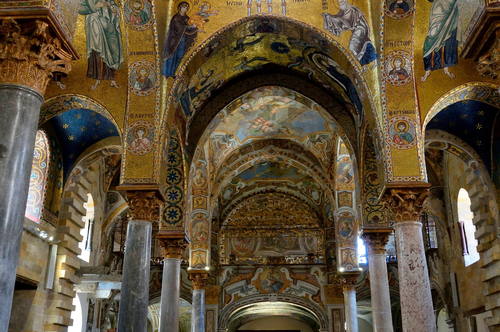
The church of St. Mary’s is also known as Church of Martorana and it is a testimony of the power held by the Byzantine and Orthodox religious culture in Palermo. Exiles Albanians, indeed took refuge here during the persecution of the Turks, leaving significant traces of their culture in the style of painting and in religious ritual.
The variety of artistic styles of this church is an example of what this city has always been a melting pot of cultures and a model of coexistence between peoples and religions.

“San Cataldo”

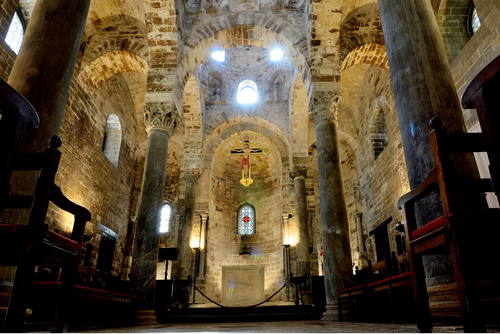
Inside the church of St. Cataldo, Christian temple built in the 20th century, it is possible to admire the marble floors decorated with Arabian style mosaics. The church is located at Piazza Bellini, near the church of the Matrorana.

“Santa Vergine Maria Assunta”

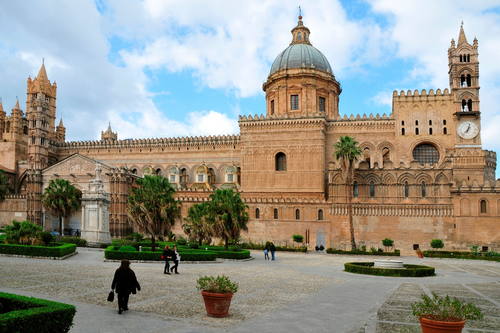
The main church in Palermo is the Metropolitan Cathedral of the Blessed Virgin Mary of the Assumption. It represents the most successful expression of different styles, such as the Gothic, Baroque, Norma Romanesque and Neoclassical. Be inspired by the stately building and during the summer participate at the evening visits rooftops, in order to admire the city from the top and take memorable photographs.

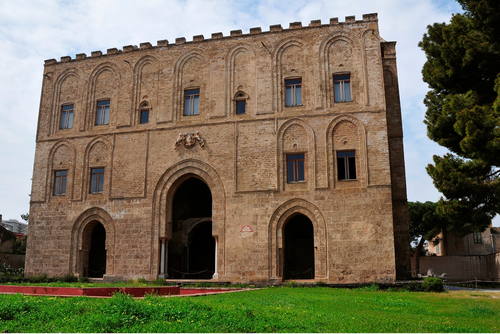
“Zisa’s Palace”

Today the Palace of the Zisa, originally a royal residence, is a museum of Islamic art and a garden, recently renovated. Zisa in Arabic means “beautiful”: you will totally agree after having walked through the castle discovering the beauty of musciarabia, wooden screens and everyday objects as candlesticks or bowls. The district is named Zisa because of the building, which also includes a park and a villa in art nouveau style.

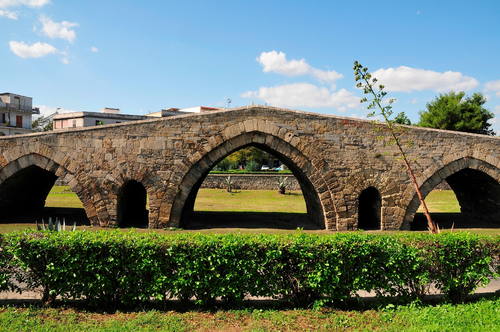
“The Admiral Bridge”

This monument was build to connect the city to the gardens beyond the river Oreto and in 1860, during the expedition of the Thousand. Here came the battle between Garibaldi and the troops Bourbon. This Norman bridge now offers a different view from the original, because the river that flowed under the bridge was diverted and now there is a garden surrounded by tree lined streets and succulents.

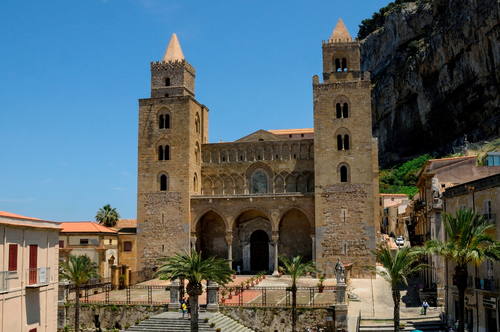
“Cefalù Cathedral”

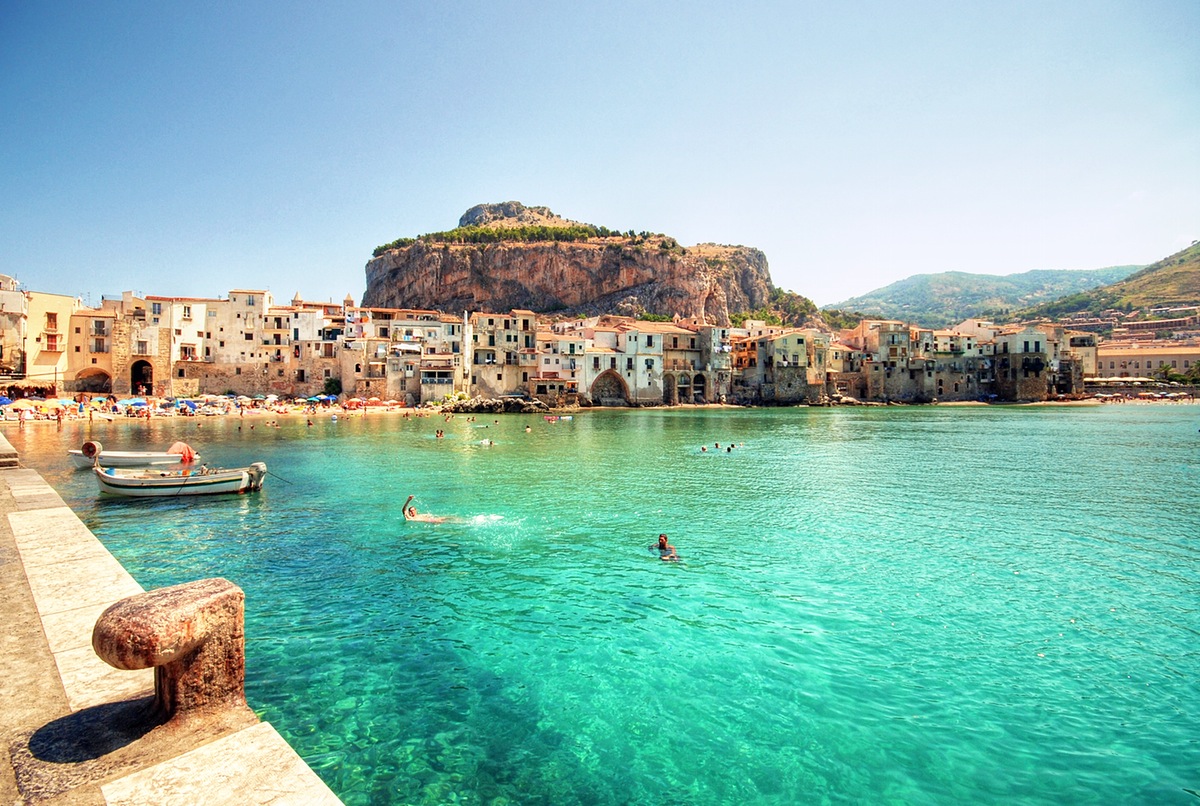
The cathedral of Cefalù is famous mostly because of its cloister, a masterpiece of medieval Sicily. Cefalù is situated on a 70km distance from Palermo and it is recommended for its beaches. Indeed, it is part of the Madonie, one of the most beautiful nature reserves in the region.
The cathedral also has a complex history since the project was modified several times and the church was never completed finally.

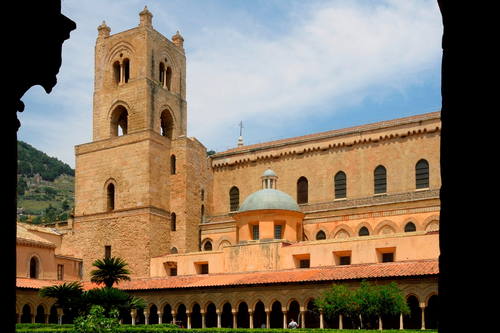
“Monreale Cathedral”

Built in the 12th century, the Byzantine mosaics that decorate the interior will amaze and surprise you by its attention to detail. The cloister is undoubtedly the most sublime from the architectural point of view, the highest result of Byzantine remained unchanged over the time.