Arab-Norman Palermo – A new entry in the UNESCO’s World Heritage
The recent news is that Palermo became a member of the UNESCO’s World Heritage, which is the 51th site in Italy, the first nation in the ranking. The decision was made during the last meeting of the World Committee in Born held during July 2015.
The UNESCO’s World Heritage is a marvellous list made of amazing cultural and natural sites all around the world. They are wonderful and unique places considered a human heritage.
Located on the northern coast of Sicily, Arab-Norman Palermo itinerary includes nine religious and civil structures dating from the era of the Norman kingdom of Sicily (1130 – 1194): in particular there are three churches, a bridge, two palaces, three cathedrals including the cathedrals of Monreale and Cefalú.
These monuments represent the social-cultural syncretism between Byzantines, Islamic and Western cultures on Sicily, from which the new concepts of space, decoration and traditional structure of this art were originated.
There are also testimonies of people of different cultures as Latin, French, Byzantine, Muslim, Jewish and Lombard regarding the coexistence.
“Il Palazzo dei Normanni”

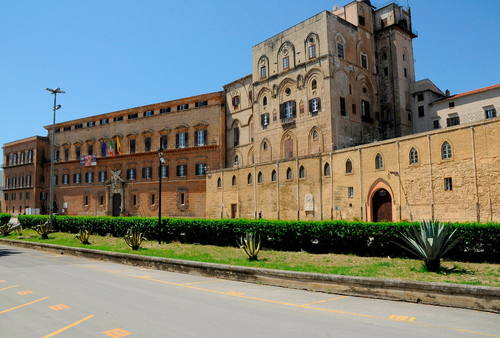
The Norman Palace is the oldest royal residence in Europe and was build during the Islamic domination of Sicily (lasting from 827 to 1091). Following the Normans to reign and to transform the original Arabic palace in a complex structure, making also the Palatine Chapel, a three-aisled basilica in Byzantine – Norman style.
Today the Norman Palace is also home to the Sicilian Regional Assembly and the Astronomical Observatory citizen.
“San Giovanni degli Eremiti”
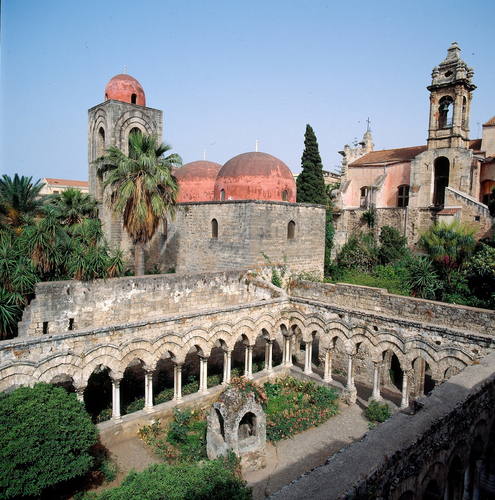
The church of San Giovanni of the Heremits. Located near the Norman Palace, dates back to the 6th century and was first a mosque, then a Christian church by the will of the sovereign Ruggero II, finally restored in 1880 in order to bring out the calls to the East, as proved from the domes colour red.
“Santa Maria dell’Ammiraglio”
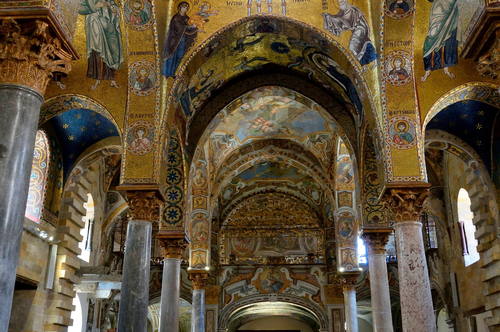
The church of St. Mary’s is also known as Church of Martorana and it is a testimony of the power held by the Byzantine and Orthodox religious culture in Palermo. Exiles Albanians, indeed took refuge here during the persecution of the Turks, leaving significant traces of their culture in the style of painting and in religious ritual.
The variety of artistic styles of this church is an example of what this city has always been a melting pot of cultures and a model of coexistence between peoples and religions.
“San Cataldo”
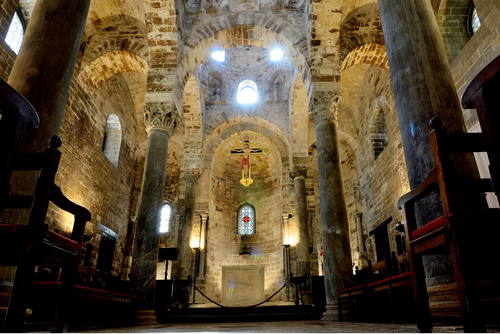
Inside the church of St. Cataldo, Christian temple built in the 20th century, it is possible to admire the marble floors decorated with Arabian style mosaics. The church is located at Piazza Bellini, near the church of the Matrorana.
“Santa Vergine Maria Assunta”
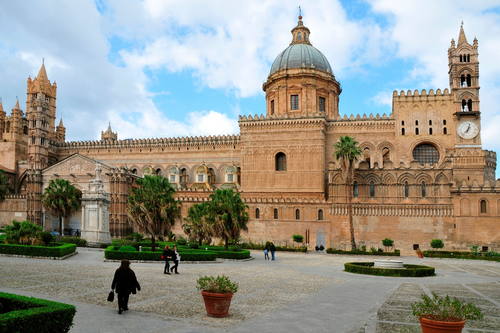
The main church in Palermo is the Metropolitan Cathedral of the Blessed Virgin Mary of the Assumption. It represents the most successful expression of different styles, such as the Gothic, Baroque, Norma Romanesque and Neoclassical. Be inspired by the stately building and during the summer participate at the evening visits rooftops, in order to admire the city from the top and take memorable photographs.
“Zisa’s Palace”
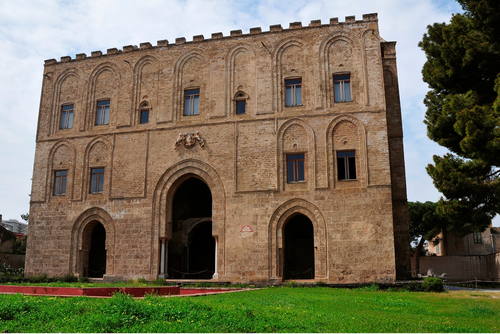
Today the Palace of the Zisa, originally a royal residence, is a museum of Islamic art and a garden, recently renovated. Zisa in Arabic means “beautiful”: you will totally agree after having walked through the castle discovering the beauty of musciarabia, wooden screens and everyday objects as candlesticks or bowls. The district is named Zisa because of the building, which also includes a park and a villa in art nouveau style.
“The Admiral Bridge”
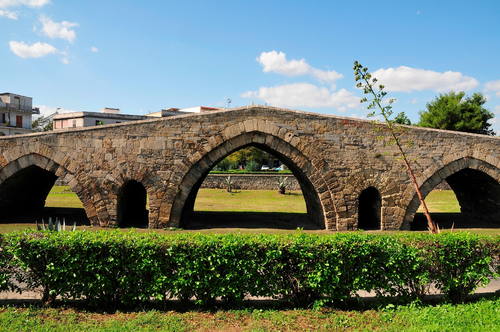
This monument was build to connect the city to the gardens beyond the river Oreto and in 1860, during the expedition of the Thousand. Here came the battle between Garibaldi and the troops Bourbon. This Norman bridge now offers a different view from the original, because the river that flowed under the bridge was diverted and now there is a garden surrounded by tree lined streets and succulents.
“Cefalù Cathedral”
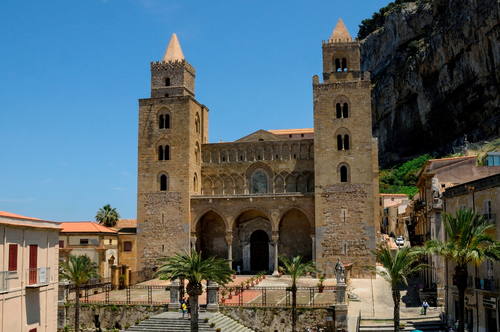
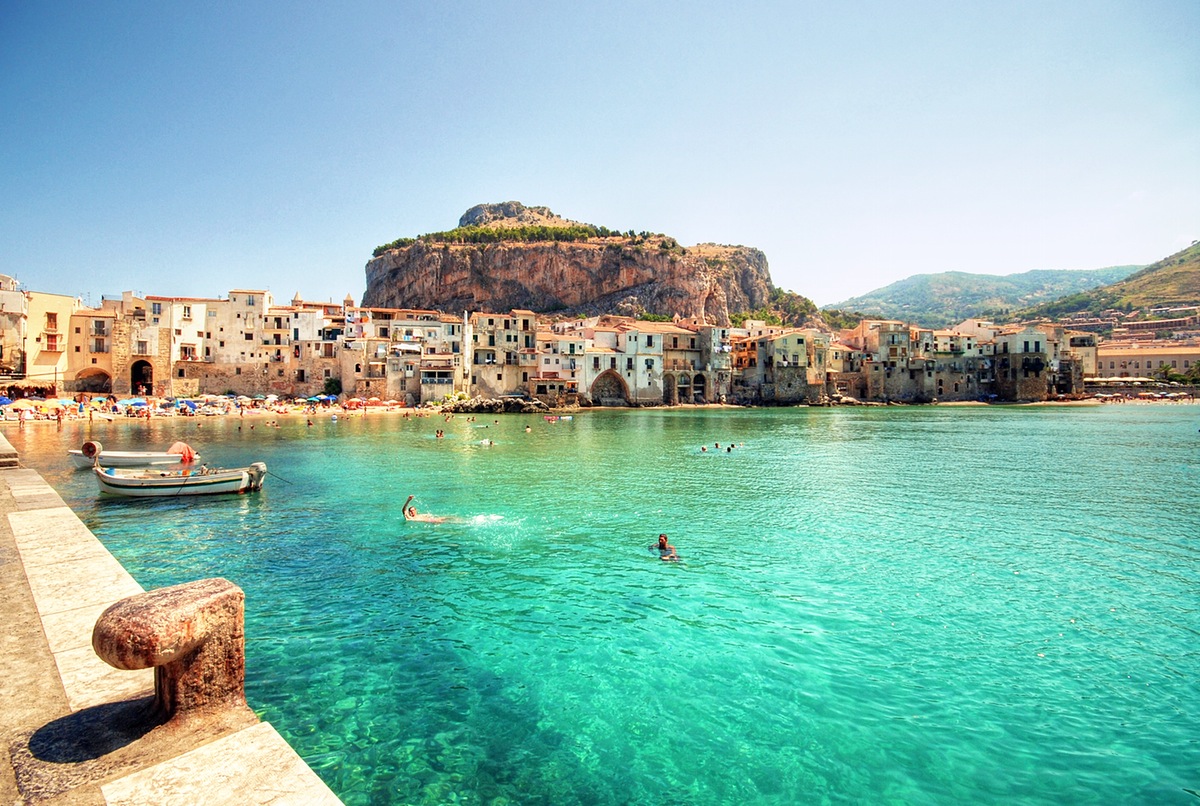
The cathedral of Cefalù is famous mostly because of its cloister, a masterpiece of medieval Sicily. Cefalù is situated on a 70km distance from Palermo and it is recommended for its beaches. Indeed, it is part of the Madonie, one of the most beautiful nature reserves in the region.
The cathedral also has a complex history since the project was modified several times and the church was never completed finally.
“Monreale Cathedral”
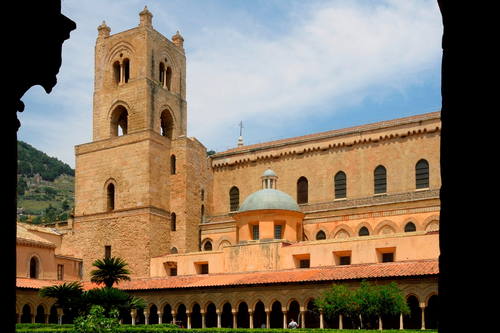
Built in the 12th century, the Byzantine mosaics that decorate the interior will amaze and surprise you by its attention to detail. The cloister is undoubtedly the most sublime from the architectural point of view, the highest result of Byzantine remained unchanged over the time.